UNICORN778 Fossil fuel subsidies are the ‘worst energy policy in the world,’ researchers say Peluang Terburuk Saat Bermain Slot Online
In an editorial in Science, U.S.-based energy policy experts Paasha Mahdavi and Michael Ross argue that governments creating consumer fossil fuel subsidies in response to rising energy prices is the “worst energy policy in the world.”
Mahdavi, an associate professor at the University of California, Santa Barbara, in the U.S., and Ross, a professor at the University of California, Los Angeles, write that following increasing fossil fuel prices due to the U.S.-Israeli war on Iran, many countries have adopted subsidies for consumers that keep fossil fuel prices low. The governments finance the gap through other means like taxes, borrowing or lower spending elsewhere.
Mahdavi and Ross argue that fossil fuel subsidies are bad, because they drain government budgets, cause worsening air pollution, discourage investment in renewable energy, and are very difficult to get rid of once implemented. “Of the roughly 130 subsidy reforms attempted in the 21 biggest subsidizers between 2016 and 2023, 70% collapsed within a year. More than 90% were gone within 3 years,” the authors write.
Ross told Mongabay by email that he hasn’t yet found a fuel subsidy reform that’s worked and can be widely applied. “They’re few and far between. Mexico got rid of its subsidies around 2017 after a long and convoluted process, but it ultimately worked,” he said.
The authors write that governments reach for fuel subsidies, then find them difficult to remove because consumers are very attuned to the price of gasoline. “Unlike an electric bill or the price of bread, gas prices confront drivers every day of the week, typically posted in public locations,” they add.
Ross told Mongabay that there are countries such as Ethiopia, Norway and Uruguay that are aggressively transitioning away from fossil fuels, but it will take time.
He added that policymakers must move to reduce the demand for fossil fuels, ideally through measures like support for electric vehicles and installation of solar, wind, and possibly other renewables.
Energy researcher Jonas Kuehl of the International Institute for Sustainable Development, who wasn’t part of the editorial, told Mongabay by email that while protecting people from sudden price rises is often essential, open-ended fuel subsidies are a bad energy policy. However, time-limited fuel subsidies for low-income households or essential transport services may sometimes be justifiable, he added.
“Blanket fuel subsidies — such as price caps, fuel tax cuts and fixed pump prices — are among the least effective ways for governments to spend public money,” Kuehl said. “They disproportionately benefit businesses and people who consume the most fuel, rarely the poorest households, while weakening incentives to conserve energy or switch to cleaner energy alternatives.”
Kuehl said some governments are introducing alternatives to blanket fossil fuel subsidies. He cited Indonesia establishing work-from-home Fridays for civil servants, and the Netherlands launching a monthly off-peak rail pass as examples of alternatives to fossil fuel subsidies.
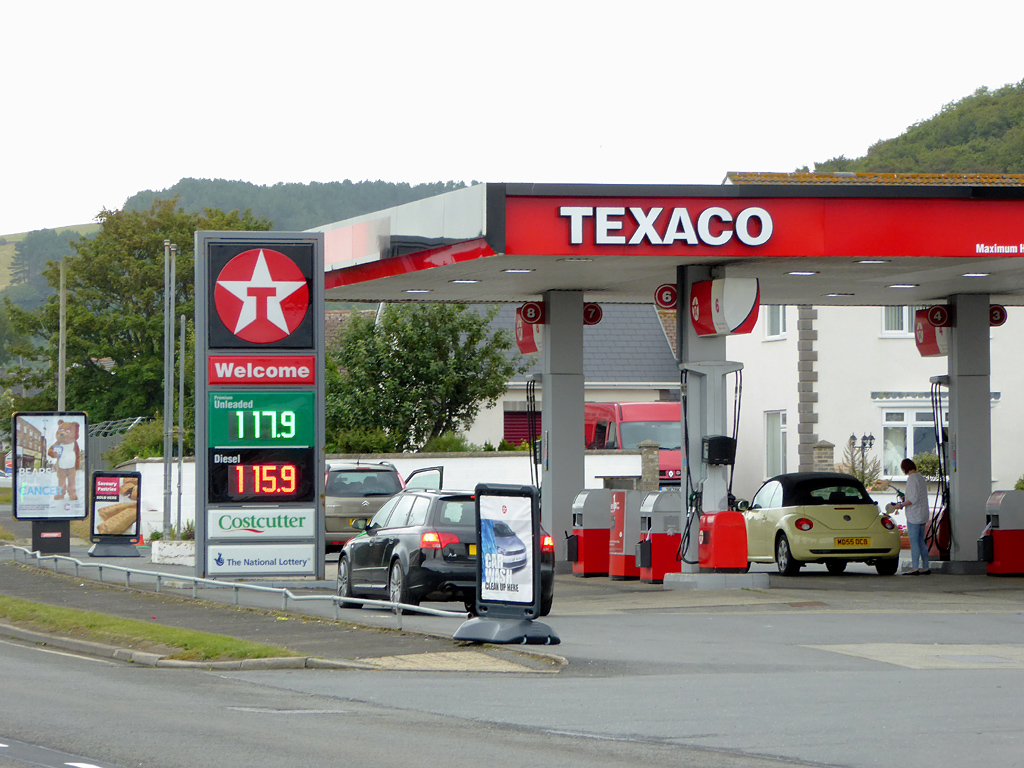
Banner image: A petrol station at Llanrhystud, Ceredigion. Image by Roger Kidd via Wikimedia Commons (CC BY-SA 2.0).