UNICORN778 “Awaiting Their Returns: Impunity and the State’s Failure to Resolve Enforced Disappearances” Peluang Terburuk Saat Bermain Slot Online
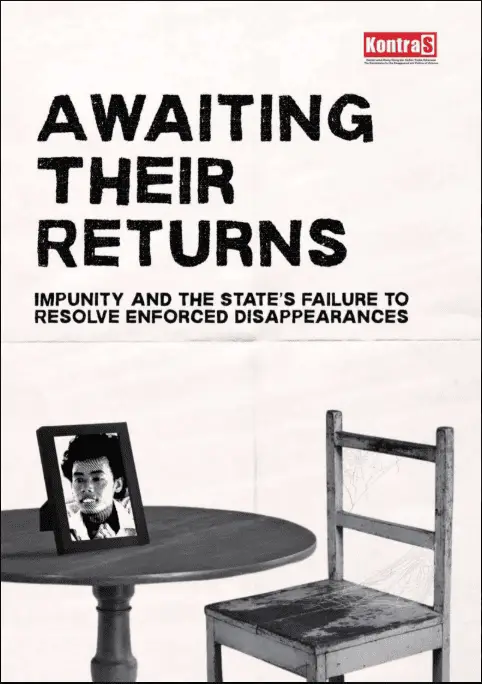
Enforced disappearances began to garner international attention when abductions of opposition members, which often resulted in torture or murder, became rampant under military dictatorships in Latin America throughout the 1960s to 1970s, as was the case in Chile (1973–1990) and Argentina (1976–1983). Such actions were later replicated by various dictatorial regimes in many countries. Enforced disappearance generally targets opposition groups and is often accompanied by arbitrary arrest, detention, torture, and extrajudicial killing.
In Indonesia, the practice of enforced disappearance was widespread during the New Order era, particularly in connection with various gross human rights violations. Records compiled from investigations conducted by the National Human Rights Commission (Komnas HAM) and documentation by KontraS indicate that enforced disappearance occurred in nine instances of gross human rights violations, that are, the 1965–1966 Case; the Mysterious Shootings (Petrus) of 1982–1985; the Tanjung Priok Case of 1984; the Talangsari Case of 1989; the Rumoh Geudong and Other Sattis Posts Case in Aceh from 1989–1998; the 1997–1998 Enforced Disappearances; the East Timor Case of 1999; the Wasior Case of 2001; and the Timang Gajah Case of 2001. The total number of victims of enforced disappearance recorded across these various cases stands at 33,125.
In addition to the various instances of gross human rights violations, enforced disappearances also occurred during several military operations conducted by Indonesia in Aceh, East Timor (now Timor-Leste), and Papua. Data from the Aceh Truth and Reconciliation Commission (Aceh KKR), published in its Peulara Damee report, states that 371 people were victims of enforced disappearance during military operations in Aceh between 1976-2005. Meanwhile, the Commission for Reception, Truth and Reconciliation in East Timor (CAVR) reported that 1,438 people were allegedly victims of enforced disappearance between 1975-1999. A similar situation has also occurred in Papua. ELSHAM Papua has documented enforced disappearances in various circumstances, including the Teminabuan Case of 1966–1967, the Sentani Case of 1976, the Bloody Biak Case, as well as the enforced disappearances of Theys Hiyo Eluay and Aristoteles Masoka.
Laporan selengkapnya dapat diakses di tautan berikut: